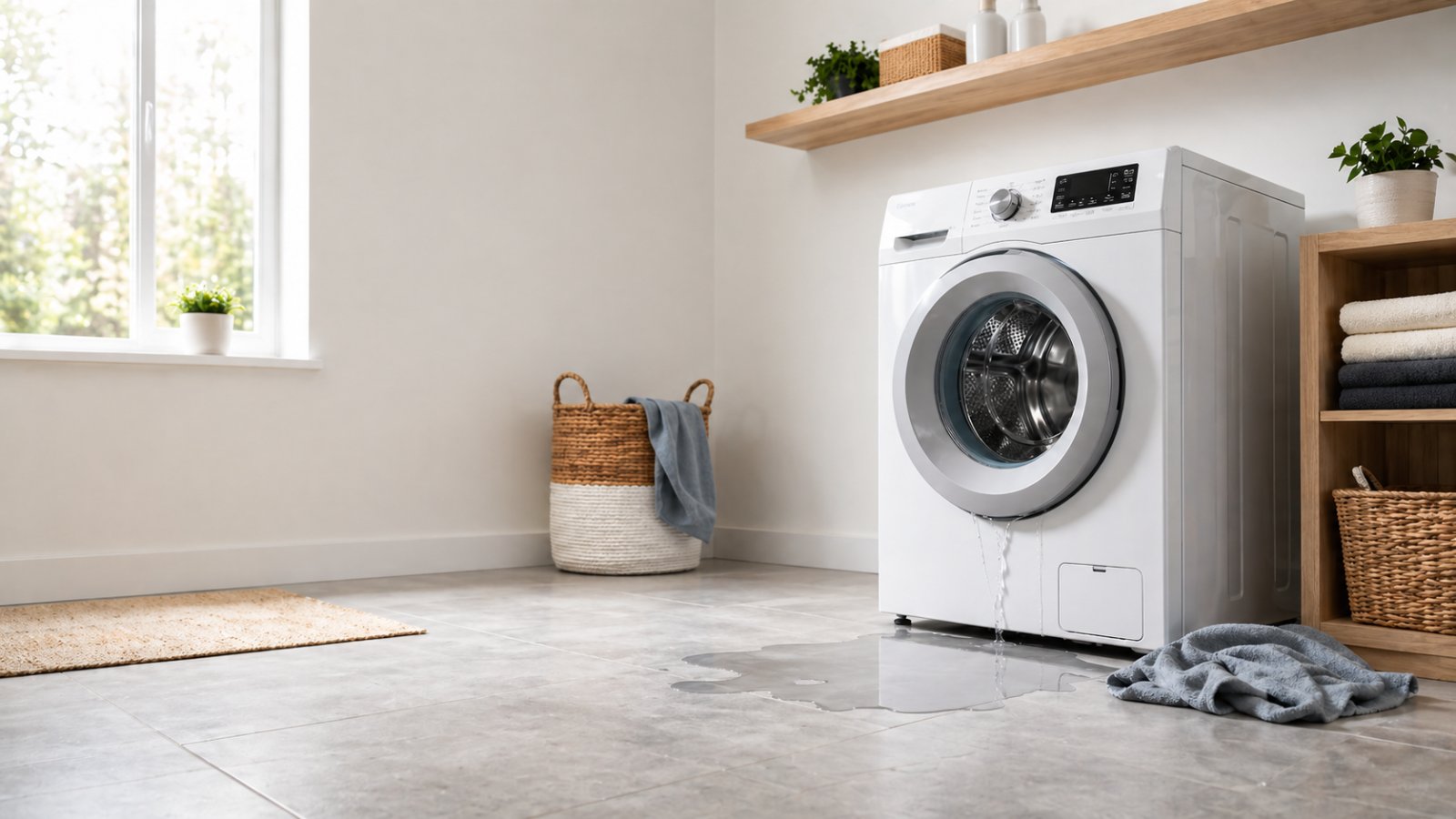
At TrueFix Appliance Repair, we've handled thousands of leak calls across Toronto, and most come down to six common issues. Here's how to diagnose your washing machine leak quickly and safely — and which fixes you can do yourself before booking a technician.
First: Stop the Leak Immediately
Before you troubleshoot anything, contain the damage:
- Turn off the water supply valves behind the washer (hot and cold).
- Unplug the machine from the wall outlet.
- Soak up standing water with towels to prevent floor damage and mould.
Now you can troubleshoot safely. Below are the six most common causes of a washer leaking water, organized by where you see the water coming from.
1. Leaking from the Bottom
If water pools underneath the machine, the most common causes are:
- Loose or cracked drain hose — Pull the washer out and inspect the hose at the back. Tighten clamps or replace if you see cracks.
- Worn door seal (front-loaders) — Check the rubber gasket for tears, debris, or mould. Wipe it clean and inspect for damage.
- Faulty water pump — If you hear grinding noises during the spin cycle, the pump may be cracked. This needs professional repair.
2. Leaking from the Front (Front-Load Washers)
Front-loaders almost always leak from the door seal. Check for:
- Hair, coins, or small items trapped in the gasket
- Visible tears or holes in the rubber
- Soap scum buildup preventing a tight seal
Pro tip: Clean the gasket monthly with a 1:1 vinegar and water solution to extend its life and prevent mould buildup.
3. Leaking from the Back
This usually points to the fill hoses connecting your washer to the wall. Inspect:
- Hose connections at both ends — tighten if loose
- Bulges or cracks in the rubber hoses (replace every 5 years)
- The inlet valve where hoses connect to the machine
4. Leaking During the Spin Cycle Only
If leaks only happen during spin, suspect:
- Overloaded drum causing imbalance — try smaller loads
- Worn tub seal or bearing — a professional repair
- Cracked outer tub from years of heavy loads
5. Leaking Detergent or Soapy Water
Too much detergent creates excess suds that overflow the drum. Use only HE (high-efficiency) detergent in modern machines, and follow the dosage instructions on the label — most people use 2–3× more than they need.
6. Leaking from the Detergent Drawer
Pull out the drawer and clean it thoroughly. Built-up detergent residue blocks water flow and forces it out the front of the machine. A monthly rinse keeps the drawer clear.
When to Call a Toronto Appliance Repair Technician
DIY fixes work for hose tightening, gasket cleaning, and detergent issues. Call a professional if you notice:
- Water pump failure or grinding noises
- Cracked outer tub
- Leaks from inside the machine you can't locate
- Recurring leaks after DIY repairs
Our certified team handles all major brands — see our washing machine repair services for pricing and same-day availability.
Toronto-Specific Tip: Hard Water and Your Washer
Toronto's moderately hard water leaves mineral deposits that can degrade hoses and seals faster than in soft-water cities. Inspect your hoses every 6 months and consider running a washer cleaner monthly. If you're in a hard-water hotspot like North York or Scarborough, your washer's components may wear out 1–2 years sooner than the manufacturer's estimate.
Need fast washing machine repair in Toronto?
TrueFix offers same-day service across Toronto and the GTA. We repair all major brands — Samsung, LG, Whirlpool, Maytag, GE, and more.
Call (647) 874-2990 Book Online

